How to Use a Yoga Strap for Hamstring Flexibility
by: Nate Navarro
Last Updated: 05 March 2026
Tight hamstrings are one of the most common mobility limitations affecting posture, athletic performance, and everyday movement. Long periods of sitting, repetitive training, or limited stretching can gradually reduce hamstring flexibility.
A yoga strap is one of the most effective tools for improving hamstring flexibility safely. By extending your reach and supporting proper alignment, a strap allows you to deepen stretches gradually without forcing your body into uncomfortable positions.
In this guide, you’ll learn how to use a yoga strap for hamstring flexibility, along with several effective stretches you can incorporate into your routine.
Why Use a Yoga Strap for Hamstring Stretches?
Yoga straps help make stretching more effective because they provide external assistance while maintaining proper body alignment.
Research on stretching shows that both active and passive stretching techniques can significantly improve hamstring flexibility over time.
Tools like yoga straps support this process by allowing controlled passive stretching, which may help increase range of motion and stretch tolerance.
Using a yoga strap can help you:
- Improve flexibility gradually
- Maintain proper posture during stretches
- Reduce strain on the lower back
- Increase stretch control and stability
Because the strap acts as an extension of your arms, it allows you to reach your foot without rounding the spine.
How to Set Up a Yoga Strap for Hamstring Stretches
Before beginning, create a simple loop with your strap.
- Sit or lie comfortably on a mat.
- Place the middle of the strap around the ball of your foot.
- Hold both ends of the strap with your hands.
- Keep your spine neutral and shoulders relaxed.
From this position, you can perform several effective hamstring stretches.
Stretch 1: Supine Yoga Strap Hamstring Stretch
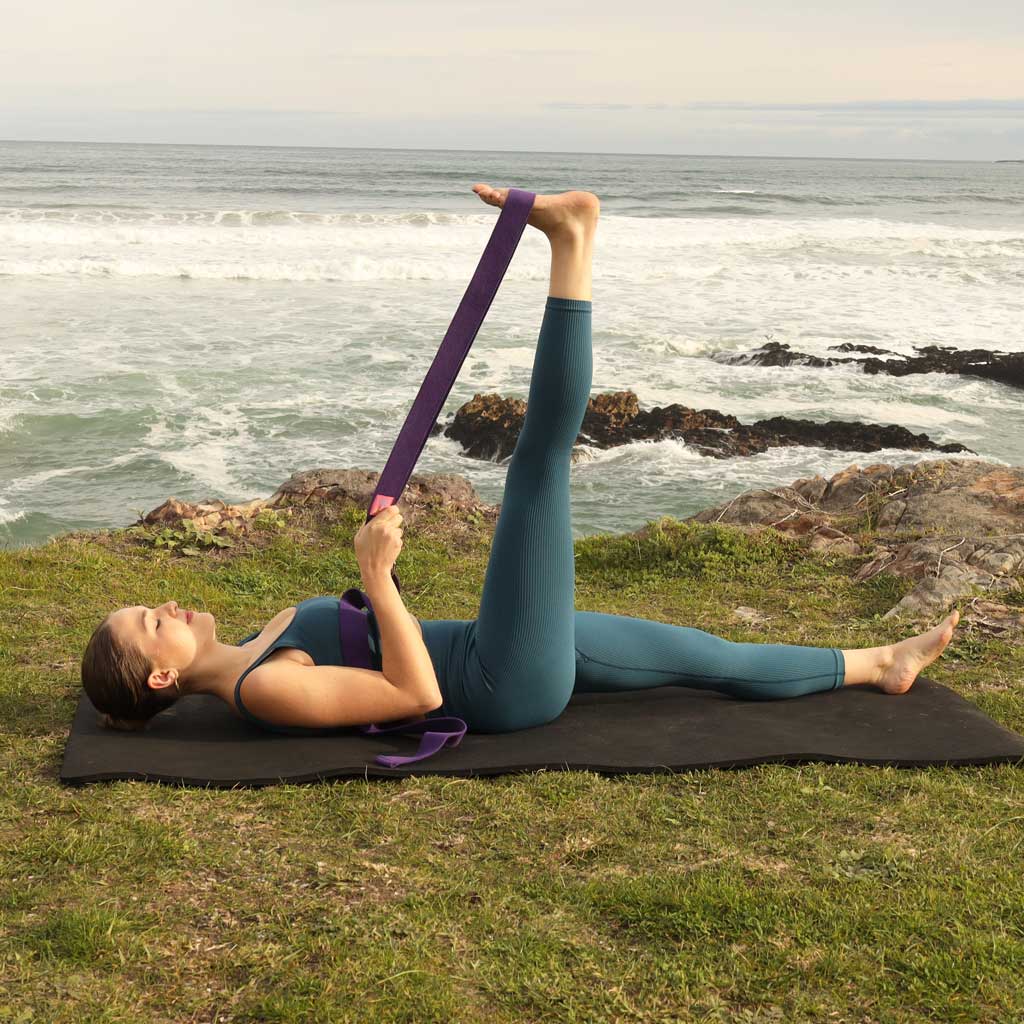
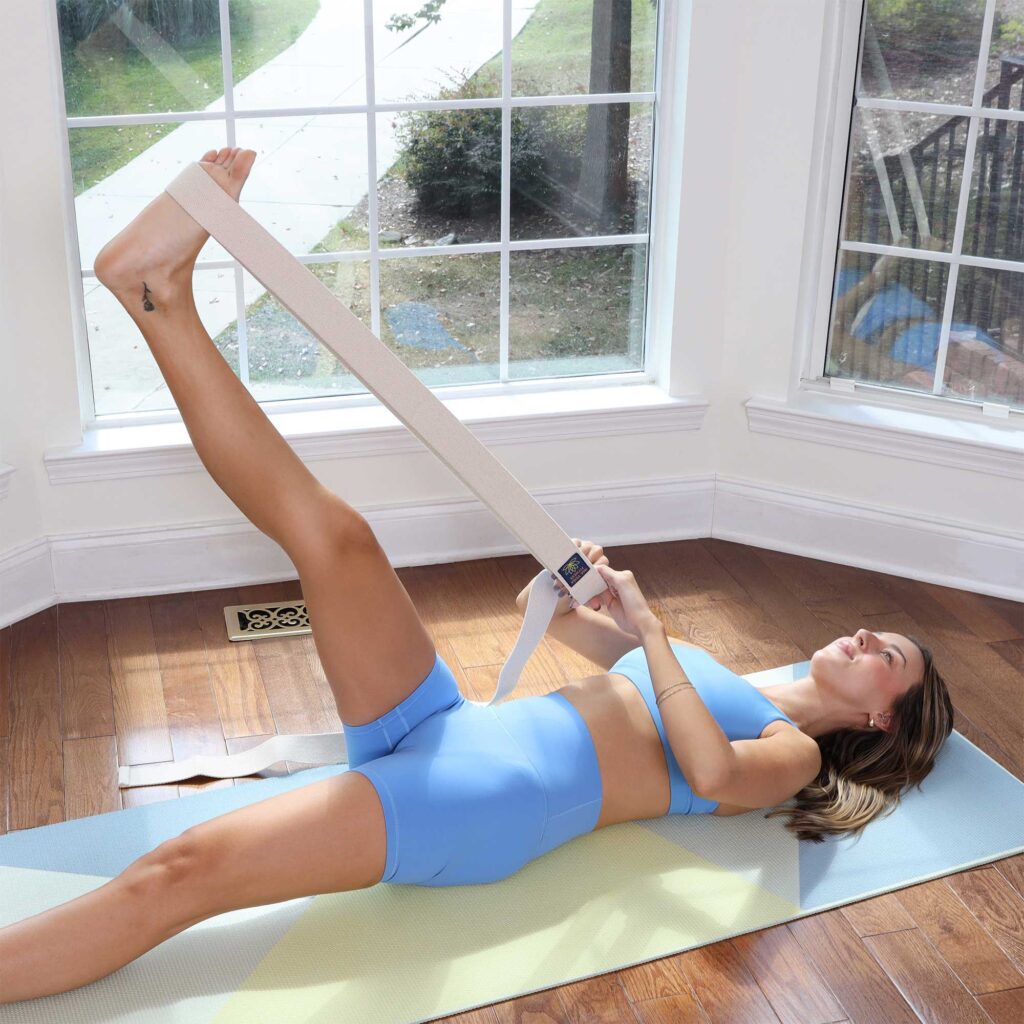
The supine hamstring stretch is one of the safest and most widely recommended ways to improve hamstring flexibility.
Studies show that both standing and supine hamstring stretches are effective at improving flexibility, making the supine version ideal for home routines.
How to perform the stretch
- Lie on your back with both legs extended.
- Place the strap around the ball of one foot.
- Slowly lift your leg toward the ceiling while keeping your leg straight.
- Use the strap to gently guide the leg closer to your body.
- Keep your hips level and your opposite leg flat on the floor.
- Don’t forget to breath!
Hold for 20–30 seconds, then switch sides.
Benefits
- Isolates the hamstrings safely
- Supports controlled stretching
- Reduces strain on the lower back
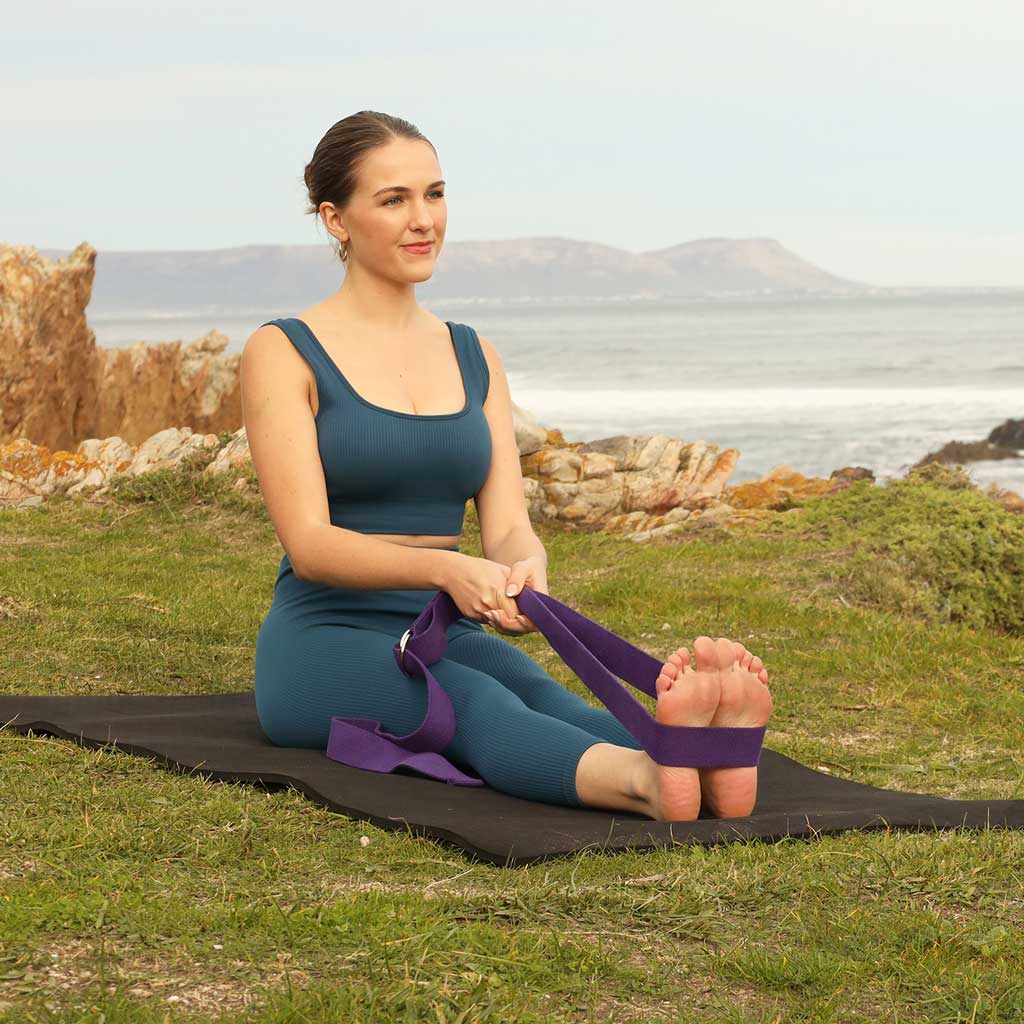
Stretch 2: Modified Seated Forward Fold with Yoga Strap
This stretch builds on the traditional seated forward fold while maintaining proper alignment
How to do it
- Sit upright with both legs extended forward.
- Loop the strap around the soles of your feet.
- Hold the strap ends with both hands.
- Hinge forward from your hips while keeping your back straight.
- Use the strap to maintain tension without rounding your spine.
Hold for 20–30 seconds.
Benefits
- Improves hamstring and calf flexibility
- Encourages proper hip hinging
- Helps maintain spinal alignment
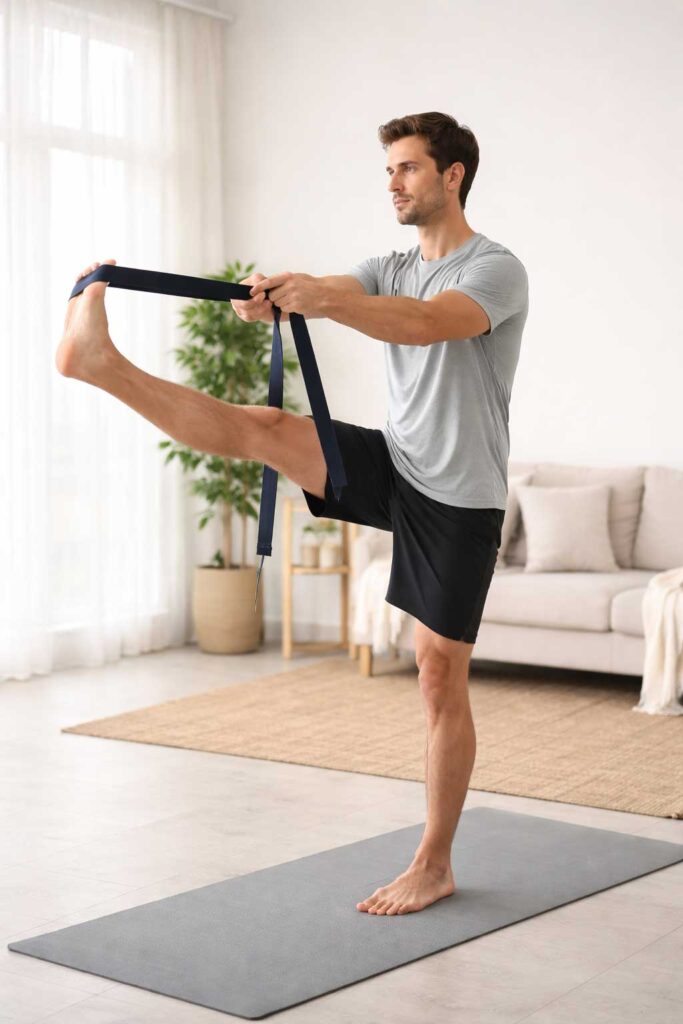
Stretch 3: Strap-Assisted Standing Hamstring Stretch
This stretch introduces a standing variation that improves both flexibility and balance.
How to perform the stretch
- Stand upright with the strap looped around one foot.
- Hold the strap with both hands.
- Slowly extend the leg forward while keeping the knee slightly bent if needed.
- Maintain a tall spine and engaged core.
Hold for 15–25 seconds.
Benefits
- Builds active flexibility
- Improves balance and control
- Engages supporting muscles
How Often Should You Stretch Your Hamstrings?
Consistency is the most important factor in flexibility improvement.
Research suggests that regular stretching over several weeks significantly increases hamstring flexibility.
Experts generally recommend:
- Stretching 3–5 times per week
- Holding stretches 20–30 seconds
- Performing 2–4 repetitions per leg
Frequency matters more than intensity when developing flexibility.
Tips for Improving Hamstring Flexibility Safely
To get the best results from yoga strap stretching:
Move gradually
Avoid forcing the stretch. Flexibility improves over time.
Focus on breathing
Slow breathing helps muscles relax during stretching.
Keep your spine neutral
Stretch from the hips rather than rounding your back.
Stay consistent
Even short stretching sessions performed regularly can lead to noticeable improvements.
Choosing the Right Yoga Strap for Hamstring Stretching
When selecting a yoga strap, look for features that support both comfort and durability:
- Strong stitching
- Comfortable fabric (often cotton)
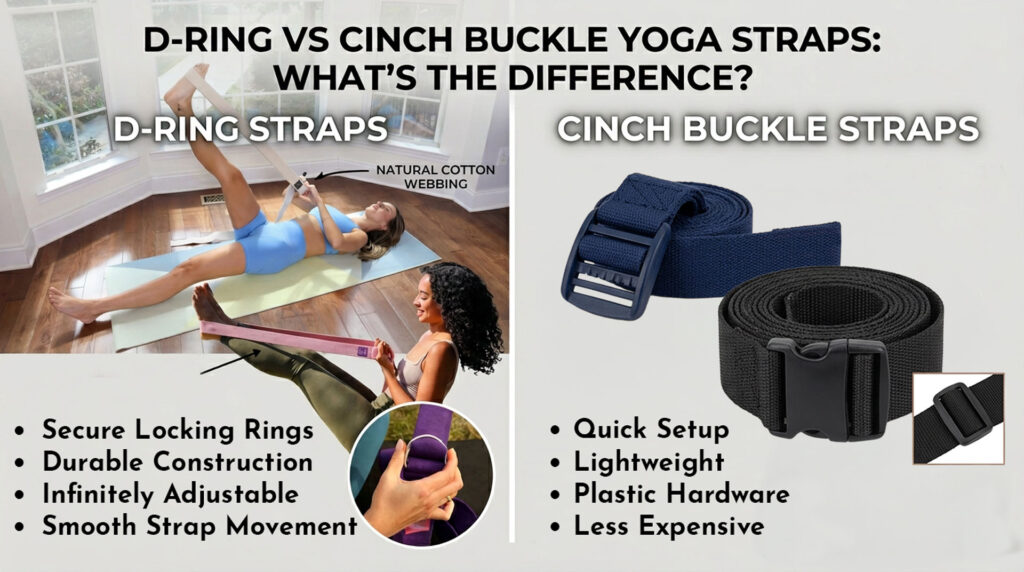
- Reliable metal buckle hardware
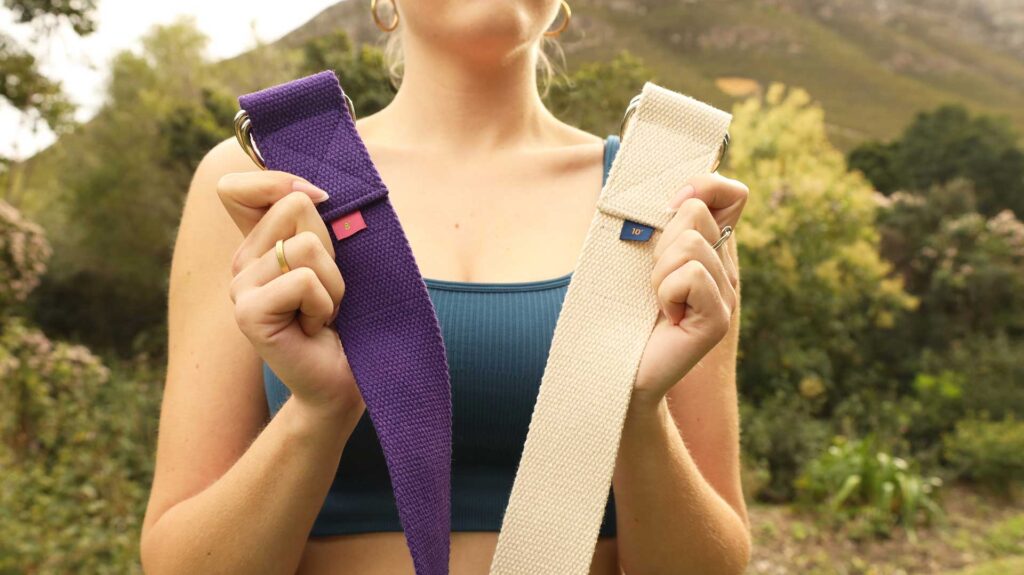
- Adequate length (8 ft or 10 ft for most adults)
A properly designed strap helps maintain alignment and makes stretching more controlled and effective.
You can explore available options here:
Browse Yoga Straps
Final Thoughts
Improving hamstring flexibility takes time, patience, and consistency.
Yoga straps make stretching more accessible by:
- Extending your reach
- Supporting safe alignment
- Allowing gradual progression
By incorporating strap-assisted stretches into your routine a few times each week, you can steadily improve flexibility and support healthier movement patterns.
You may also like:
FAQ: Frequently Asked Questions
Can a yoga strap help with tight hamstrings?
Yes, a yoga strap allows you to stretch the hamstrings safely by extending your reach and maintaining proper alignment during stretching exercises.
How often should I stretch my hamstrings?
Most flexibility experts recommend holding hamstring stretches for 20–30 seconds and repeating them several times per session.
What length yoga strap is best for hamstring stretches?
Most practitioners prefer 8-foot or 10-foot yoga straps because they provide enough length to comfortably perform lying or seated hamstring stretches.
AI-Assisted Content & Disclaimer: This content may be generated or supported by artificial intelligence and is provided for informational and educational purposes only. It does not constitute medical, physical therapy, or professional advice. Ima Yoga Fitness makes no guarantees regarding the completeness, accuracy, or reliability of this content. Users assume full responsibility for how they interpret and apply this information. Always consult a qualified healthcare or fitness professional before beginning any new exercise program. For more details, see our Artificial Intelligence (AI) Policy.